The Valorka turbine

Winner of the International Inventors Award 2011
Valdimar Össurarson was granted the IIA 2011 awards for his invention, the Valorka turbine.  IFIA (International Federation of Inventors) grants this awards for the best invention in the chosen category, which in 2011 was "sustainable energy, valdimar verdlaun_2011climate and environment".  The IIA 2011 awards were the collaboration of IFIA and SUF (the Swedish Inventors´ Association) and the prize sum, 450 000 SEK is funded by Agne Johansson Memorial Fund.  Valdimar got the 1st prize; Rasmus Norling, Sweden, got the 2nd prize and Khaled Abdul Hamed, Egypt, got the 3rd.  The Award ceremony took place during National Inventors' Day on 5 October at the Inventions for the Future trade fair at the Scandinavian Technical Fair.  The SUF celebrated its 125th anniversary with a great exhibition where hundreds of inventors and innovators presented their ideas and products.  Valdimar(to the right on the picture below) was presented the 1st awards by Agne Johansson (left); a document and award sum of 300 000 SEK.
The prize is very important to the Valorka project.  It underlines its importance and usefulness and it will pave the way for further development.  The prize money will be used entirely for development, along with the support from the Icelandic fund Taeknithounarsjodur.

About the Valorka turbines
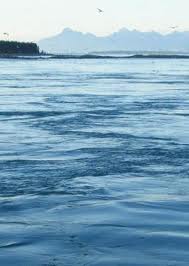
The Valorka turbines are a new technology, intended to harness the vast power of tides in the coastal areas.  Not only the fast flowing currents within narrow fjords and straits, but also the slower currents by capes and shallows.  Latest steps in development confirm these expectations.

voThe Valorka turbines are the inventions of Valdimar Össurarson.  His earlier ideas include an avalanche early warning system; a safety line for fishermen and a wave energy converter.  Valdimar is now chairman of the Icelandic Association of Innovators and Inventors.  His earlier jobs include farming, fisheries, trade, office work, teaching, tourism and quality managemnet.  All his life he has been interested in the pure, predictable and abundant energy of the tides; thinking of a practical way to use it.  An idea had already emerged when he was out of job in 2008.  When he first introduced his ideas he was mostly met with scepticism by most funds and the academic society:  „Why bother to invent a tidal plant when Iceland is „aboundant“  in hydro- and geothermal energy and hot water and the rest of the world has got its oil and nuclear energy?“  Valdimar soon managed to convince some of the sceptics and got enough grants to begin the development of his turbines.  Soon there emerged not one, but 5 different types of the tubine.  And still more are on the way.

The Valorka turbines are in many ways different from the propeller type turbines, most commonly being developed.  They are intended to be able to harness currents of less velocity than 2 m/sec, even less than 1 m/sec, while propeller-type turbines need a current velocity in excess of 2,5 m/sec.  Such strong currents are only found in relatively few channels while Valorka turbines may be used in wide areas outside the coasts all over the world.  Since such slow currents are not as rich in energy, the turbines must be cheaper in production and use.  This is a challenge which calls for a new approach in development.  At the present Valorka is in the forefront of this technology.

The different types of Valorka turbines will here be described very briefly:

valorka_1V-1 is the original Valorka turbine.  Although novel in both looks and function, its basis may be traced to an invention more than 2300 years old; the traditional waterwheel.  The main challenge of the Valorka turbine was how to get the waterwheel to operate submerged in a stream of water.  In order to do that it needed to be changed significantly.  The solution was to make the wheel´s sides conical in shape; split the axis in two and each shovel in two parts. Then one wheel-half can be folded towards the other in such a way that each shovel will fold completely together at one part of the wheel, but open fully at the opposite part.  In this way the turbine wheel´s resistance to the current will be more on one half of the wheel compared to the other; resulting in turning of the turbine wheel and transfer of energy to the axis.  This concept was put to test in a small-scale model and seemed to work as intended.  The picture shows a scale model for demonstration.

valorka_2V-2 is based on similar principles as V-1, but some factors have been improved.  The conical sides have been replaced by pins.  This means that the blades can extend into the „cones“, increasing the surface and resulting in more torque.  This also means more simple design and improved stability of the shovels in the current and spimplicity in construction.  A patent was granted which included both V-1 and V-2.  It also included a novel shifting mechanism, which makes it possible for the turbine to operate in currents coming from either direction, as is the case in tidal currents; while the direction of rotation remains unchanged.


valorka_3

V-3 is based on a different approach, but still bears a resemblance to the old waterwheel.  Basically it consists of one single wheelside, with shovels hinged on each side of it.  The shape of the shovels allows the current to open them at one position and shut them closed at the opposite position.  The advantage compared to V-1 and V-2 is that many V-3 turbines can be combined on a single straight shaft, using a common generator.


valorka_4V-4 is the type of Valorka turbines that has proved most effective in tub testings.  Here again the approach and methods are very different from the other types,  although it still relates to the old watewheel.  But in V-4 the there are no wheelsides at all.  Through the axle go free-spinning pins on which the shovels are fastened. The shovels are mounted on these pins in such a way that when the current hits one shovel flat-on, it hits the opposite shovel edge-on at the same time.  The resulting difference in resistance makes the turbine turn, and at the same time the current causes the shovels to shifts position.  In reversed current the shovels are flat-on at the opposite side, but the spinning direction of the turbine stays the same.  This design is a complete novelty.

V-5  is the latest type.  It will not be described in detail until all intelectual rights have been secured.  This is a direct derivative of the former types, but simpler and i has proved to be even more effective in tub-tests.  This type has been selected for the first sea trials.  A big scale model has been built, 2,3 m in diameter and 2 m wide.  It wil be slung underneath a floating raft, but can be winched out of the water for maintainance.  The energy will be transferred above the surface with a chain to an upper shaft, connected to torque meter or a generator.  The test site will be at Hornafjordur, on the Southeast cost of Iceland.  The place offers great conditions for such tests; a big estuary with many channels with tidal currents of different strength; free from the ocean waves.  The local municipality is very interested in the project, for the obvious reason that ocean energy is very abundant in the area while it has no hydro or geothermal energy.  This will be the first test of ocean energy technology in Iceland and the first turbine ever invented in iceland.  If those tests prove successfull then a prototype will soon be built.  The timeframe of course depending on finance. 

Still more novelties are on Valorka´s drawing board, such as a suitable genertor for slow turbines of this kind; a combined wave- and tidal energy device; methods to lay out and service the turbines and more.

The primary goals of the Valorka turbines design are „usefulness, simplicity and rugged design“.   This kind of turbines, sometimes referred to as „crossflow turbines“, is more suitable to harness tidal energy from relatively slow flowing currents than most of the turbine types now in development.  They are of the „axial flow“ type; many of them resembling the wind turbines used on land.  Axial flow turbines need currents in excess of 2,5 m/sec  to work effectively.  The Valorka turbine is expected to work effectively at 1 m/sec and even slower currents.  The energy in currents grows by the power of 3, and thus turbines in slower currents will not deliver the same power each as axial turbines.  But this can be compensated for by cheaper, yet bigger turbines and the electrical interconnection of turbines; turbine farms.  Their greatest advance is that they can be used in variety of places by the world´s coasts, while the fast-flowing current is limited to relatively few channels.  The Valorka turbines do not have to be as rugged  as the others and will be cheaper in production.  That means that the turbine will be accessible by poorer nations, which then can use their own energy resources and reduce their dependance on polluting oil and coal.  It will also benefit many rural districts, which need long and fragile powerlines, but then may be able to use the tidal energy by their coasts.  The Valorka turbine will thus be a great step forward in many aspects, opening new possibilities in energy production; more equal access to energy and energy safety.

The Valorka turbine is expected to be fully submerged; safe from the surface waves and weather which may be very destructive.  This also prevents hazards for ships.  The Valorka turbine is probably the only way to harness energy without any known environmental risk.  No air pollution; no chemical pollution; no visual pollution; no sound pollution; no radiation; no sacrifice of precious land.  Sceptics may point out that tidal currents are not a coninuous source of energy, as they stop and change direction up to four times a day, depending on situation.  This is true, but this can easily be compensated for by various means.  One is to connect turbines at various places along the coast; using the time difference in daily tides; other is to use other sources of energy to compensate, for example wind or hydro; the third method may be to use tidal energy to produce another form of energy, such as hot water or hydrogen.  We may have to adopt new procedures to make use of tidal energy, but the benefits are obvious.  Tidal energy is not only the most environmentally friendly, but the most predictable form of energy found on Earth.  For each place we can predict the available energy hundreds and thousands of years into the future.  Tidal energy is our future energy source.

014The Valorka turbine has successfully been tested as a scale model in a tub and it will begin sea trials in the summer 2013.  The next steps in development will be a prototype of a bigger scale.  Plans are emerging for this, and for the handling and servicing of the turbine.  The development is carried out by Valorka, working closely together with experts in many fields.  The finance has come mainly from the official Icelandic fund; „Tækniþróunarsjóður“ (Technology Development Fund).  At later stages there will probably be collaboration on on an international scale.

Along with this development program, Valorka ehf is planning a research program.  This is the pioneering project of measuring velocity and behaviour of tidal currents all around Iceland´s coast.  The goal is to gather enough information to evaluate this energy source as a whole, and at the same time to find the places most suitable for tidal plant operation.  No such research has yet been carried out for Iceland,except for a few places inside fjords.  For this project Valorka has joined forces with „Hafrannsóknastofnun“; Iceland´s Marine Research Institute; Verkís; one of the biggest engineering firms in Iceland; The University of Akureyri and Hornafjordur Municipality.  The Marine Research Institute has a long experience in marine research and has got the knowledge and equipment for the job.  Verkís is responsible for the existing tidal model for Icelandic waters, and will use the information gathered to make that model more precise for individual places in shallow water.  This project´s name is „The Icelandic Marine Energy Project“.  The Icelandic government has been watching this initiative closely and is now forming a governmental strategy on ocean energy, based on the pioneering work of Valorka.


  Valorka ehf. | Skógarbraut 1104 | 235 Reykjanesbær | Sími 426 5900 og 862 2345